


Correa Symposium: The Fluvial Amazonian City, Manaus
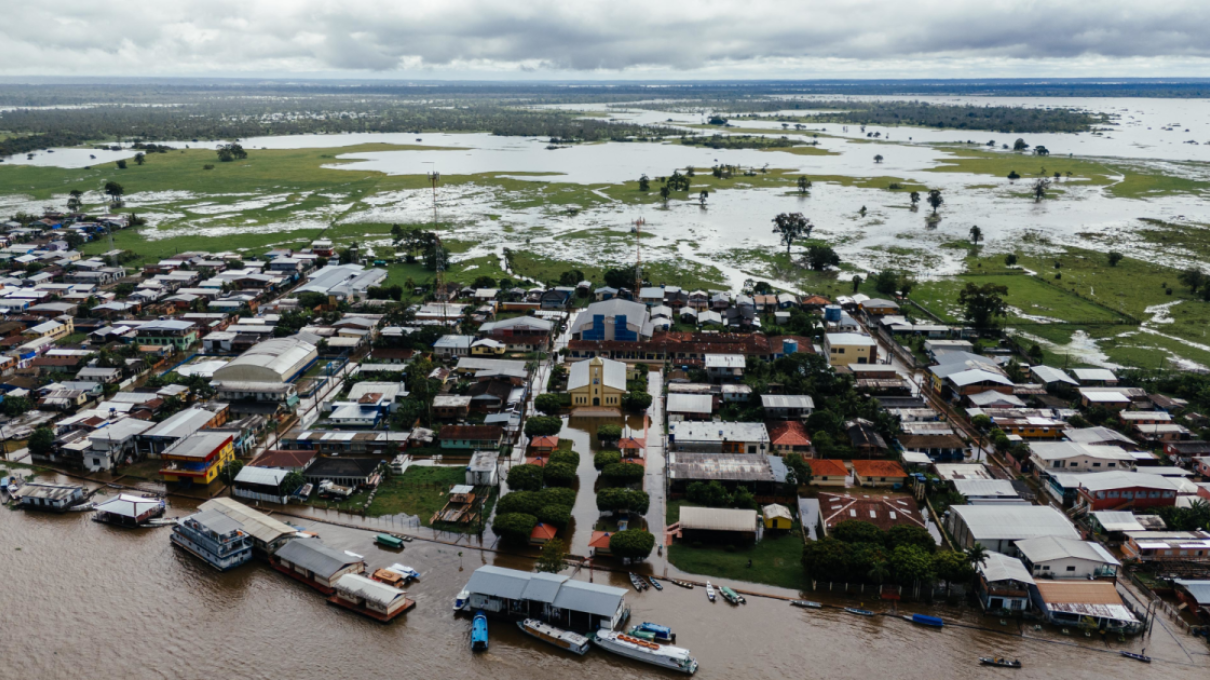
In 2025, the LCAU supported the course Fluvial Amazonian City, thanks to the Charles Correa (1955) Fund for Housing and Urbanization. The course asked students to consider how the architecture, design, and urban planning professions could learn from riverfront communities in the urbanizing Amazon and might best serve them in addressing and improving strategies for growth.
On April 6, participants will host the bi-annual Charles Correa (1955) Symposium. The in-person workshop will explore housing and sanitation realities and opportunities in the unique setting of the urbanizing Amazon and its largest city, Manaus.
RSVP and join the team on April 6 from 9:00am-12:30pm in MIT Long Lounge.
Location: MIT Long Lounge, Building 7, 77 Massachusetts Avenue, Cambridge, Massachusetts 02139.
Class and workshop supported by: The Charles Correa (1955) Fund for Housing and Urbanization at the Leventhal Center for Advanced Urbanism, MIT-LUMA, MISTI-Brazil Amazonia, MIT Department of Urban Studies and Planning, and the Inter-American Development Bank City Lab.
Featured Speakers
Vanda Witoto is an Indigenous leader and the Executive Director of the Witoto Institute, a social impact organization led by Indigenous women from the Amazon and based in the first Indigenous urban neighborhood in Brazil: Parque das Tribos in Manaus. She is a tireless and powerful advocate for climate justice, Indigenous rights, and cultural restoration in Amazonia.
Marcos Cereto is a Professor at the Faculty of Technology of the Federal University of Amazonas (UFAM), teaching in the Architecture and Urban Planning program and the Graduate Program in Design. He has coordinated the Modern Architecture in the Amazon Center (Nama) since 2016, organizing seminars, exhibitions, and publications on architecture in the Amazon.
Washington Farjado is an architect and urbanist currently leading innovation at the Inter-American Development Bank’s Cities LAB, with past leadership in Rio’s urban planning. He was a Harvard Loeb Fellow and is passionate about history, design, and sustainable development in Latin America.
Alexandre Delijaicov is the Public Architect at the São Paulo City Hall since 1992 and a Professor in the Department of Design at the Faculty of Architecture and Urbanism of the University of São Paulo (USP) since 2000. He coordinates, among other labs, the Research Group on Architectural Design for Urban River Infrastructures (Fluvial Metropolis Group) at the FAU-USP Design Laboratory since 2011.
Angelo Bucci is an award-winning architect and founder of SPBR, and Professor of the Practice in the Department of Architecture at MIT. His projects engage critically with the paradigms of modern architecture, highlighting the importance of structural accuracy and distinctness, construction viability, transparency, and, most importantly, the understanding of urban space as a field of dialogue among architectural works.
Gabriella Carolini is an Associate Professor of Urban Planning and International Development in the Department of Urban Studies and Planning at MIT. She leads the City Infrastructure Equity Lab, which centers research on equity in the governance and planning of infrastructure development across urban communities in the Americas and Africa, particularly in the water and sanitation arena.
Student Speakers
UFAM: Juliana Cambeiro
USP: Ana Julia Bettio Pereira
MIT: Shreya Bansal, Aashna Daga, Valeria Duenas, Marine Gapihan, Anushka Maqbool, Reishan McIntosh, Jacob Payne, Kaede Polkinghorne