


Team led by MIT Architect Will Plan a Regional Energy Landscape Along the Eume River Basin in Northwestern Spain
By Denise Brehm
An ambitious proposal for clean energy planning at the regional level that integrates ecologically responsible construction methods with landscape design, as well as with the energy, employment and social needs of the region’s residents, has been selected as winner of the 2025 MIT Norman B. Leventhal City Prize, awarded by the MIT Leventhal Center for Advanced Urbanism (LCAU).
The project is led by architect and urbanist Roi Salgueiro Barrio, who is a lecturer in the MIT Department of Architecture and was cocurator of the Spanish Pavilion at the 2025 Venice Architecture Biennale, where this project was first initiated.
The region designated for the work is the 180 square miles of the Eume River Basin – located in Galicia in northwestern Spain – and on the municipality of As Pontes, which, with 12,000 residents, is the main town on the Eume River.
“We envisioned the Leventhal City Prize as a platform for ideas capable of reshaping how we understand and build our world,” said Sarah Williams, the Leventhal Professor of Advanced Urbanism and director of the LCAU. “The Eume River Basin proposal rises to that ambition: expanding the scale of urban thinking to encompass an entire region, and aligning energy futures with ecological and social well-being.”
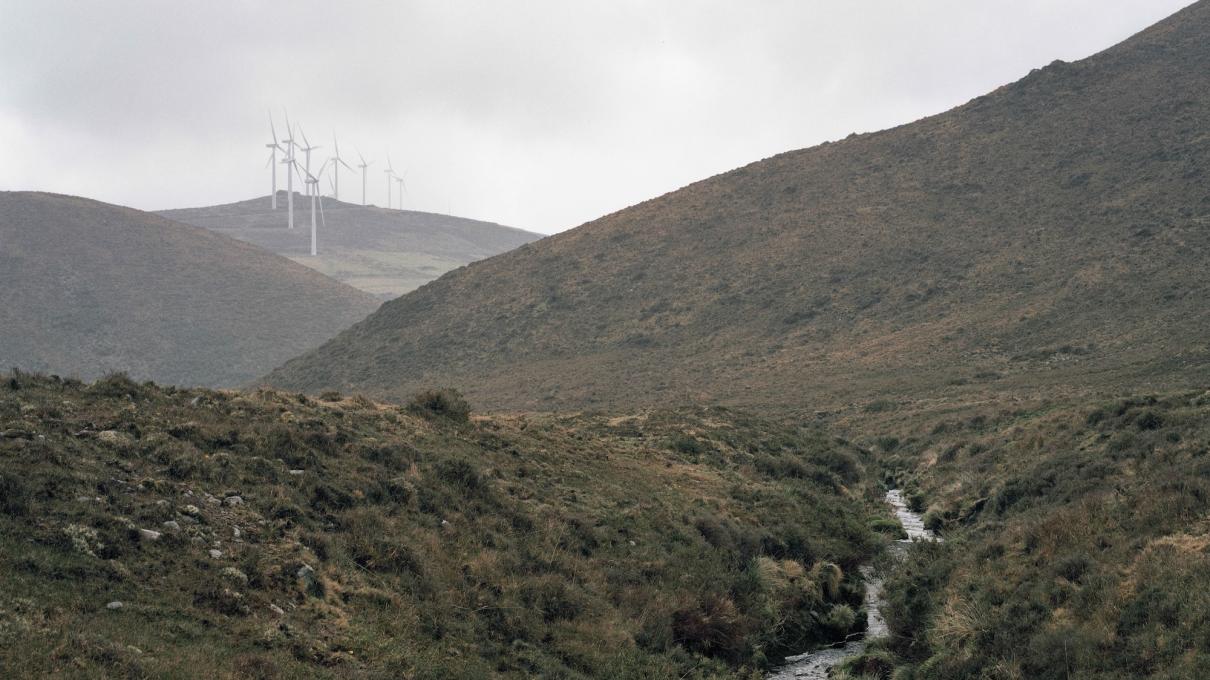
The Eume River Basin has been for decades a major energy hub in Spain. Energy production in the region started in the 1950s with the construction of a major hydroelectric dam, and was followed by construction of the As Pontes power plant – a facility built in the 1970s that was fueled by a coal mine close to the city. This was Spain’s largest power plant until its closing in 2021. The lead up to the closing of the coal mine coincided with the construction of dozens of wind turbine parks, which have turned the Eume River Basin into a key node of clean energy production. However, the power produced by all these infrastructures connects to a national power grid rather than providing service directly to the local communities.
- Image
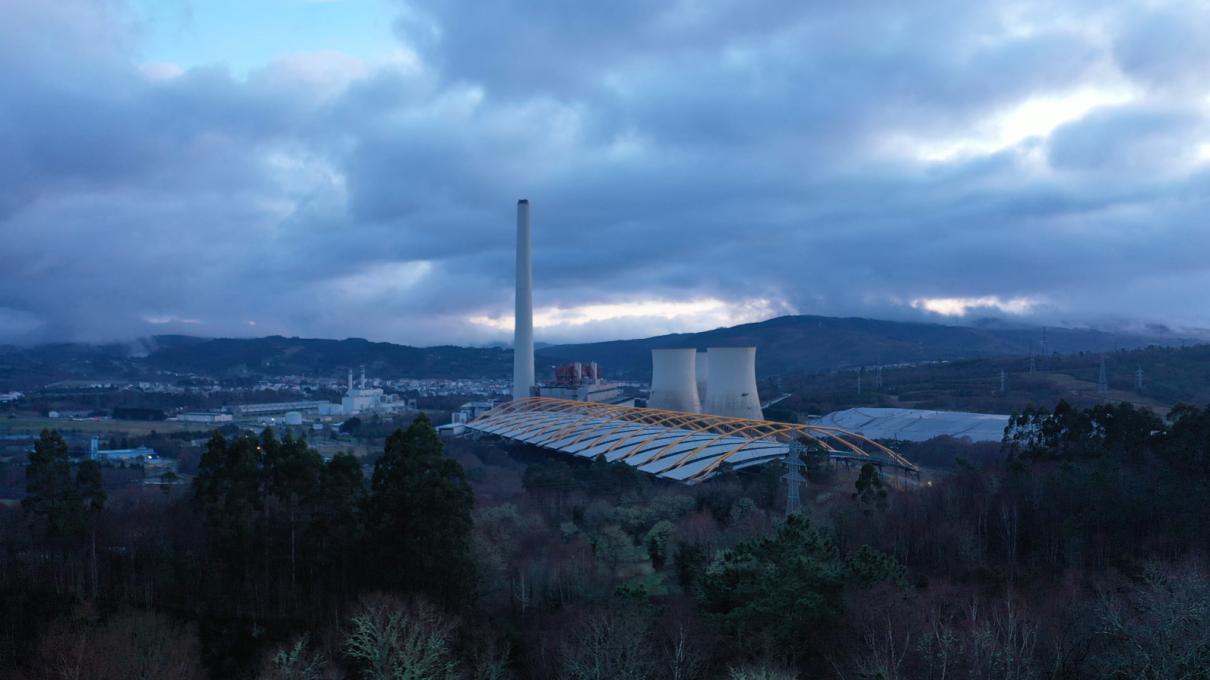 Aerial photograph of As Pontes, showing the decommissioned power station in the foreground and new wind turbines on the surrounding hills. Credit: Luis Díaz Díaz
Salgueiro Barrio and his partners refer to the area as an “energy landscape,” but one that has been poorly designed without input from, nor economic benefit to, the residents of the river basin. This has led to a crisis in the area, resulting in protests by residents who want to see clean energy initiatives that benefit them economically by providing jobs, as well as energetically – keeping the energy in the region rather than necessarily sending it to a larger grid – and that also respect the area’s geography, ecological conditions, and cultural values.
“Many collectives are protesting against the introduction of energy systems, because they clash with ecological conditions or spaces with cultural value,” Salgueiro Barrio says. “So, people are basically arguing against the deployment of renewable energy. And it’s not that they are against it; they are against the way in which it is being done.”
With the $100,000 provided by the Leventhal Prize, the project team plans to create a new design for this energy landscape in a way that fulfills the potential for wind, water, hydroelectric, and also solar power.
- Image
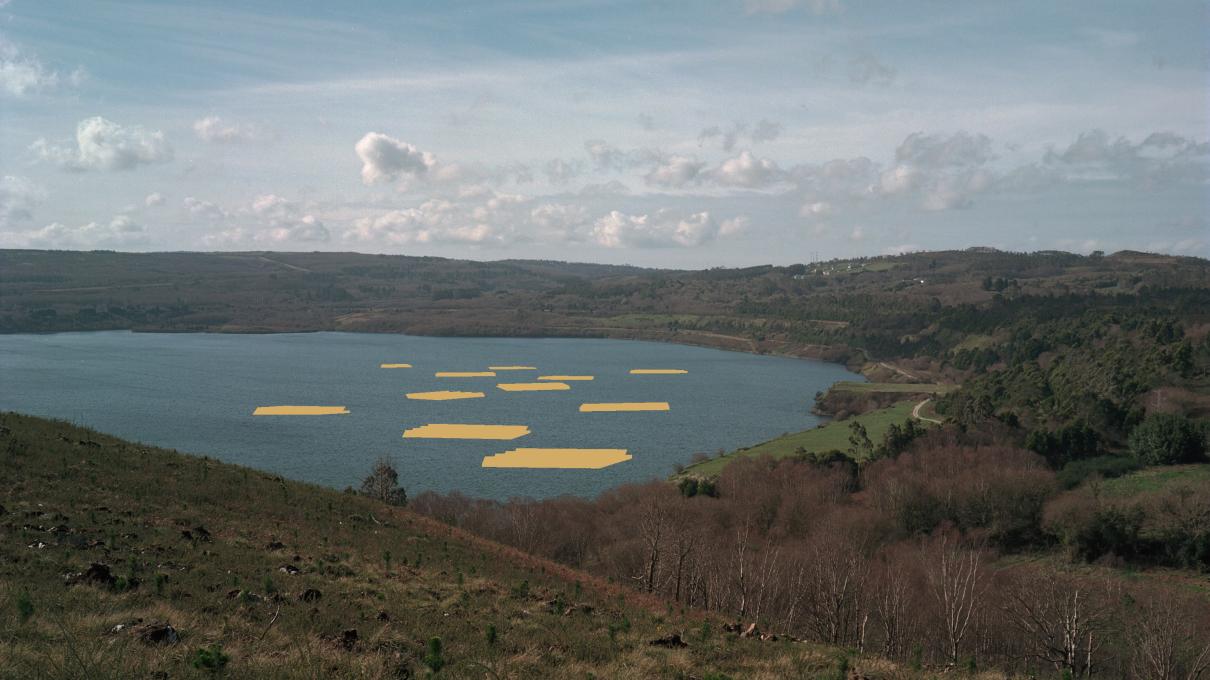 Proposed strategy for hyper-local energy production: solar rafts placed on the artificial lake formed in the former mining pit. Credit: Project team
The first year of the project will involve planning a Territorial Framework for the Eume River Basin, the first of its kind in Spain. The following two years will focus on preparation of what the team calls Hyper-Local Strategies for Energy Transition, or the design of three pilot projects for As Pontes: one for solar energy, one for wind energy, and one for hydropower. Each of these will involve manufacturing using locally available building materials and labor, so that both the power generated and the economic value of generating the power benefit the city’s residents.
“We aim to engage citizens and restore their pride in energy production by giving them ownership, providing designs that impact positively upon their livelihoods, are produced locally and sustainably, and are not hidden but integrated into everyday spaces,” Salgueiro Barrio says.
Although the project is just getting started and the three pilot projects have not yet been determined, Salgueiro Barrio advanced one example that offers insight into the team’s creative approach to energy generation that fits with the area’s existing infrastructure: the placement of solar panels on wooden river rafts, the sort of rafts already widely used for harvesting mussels along the Galician coast.
“The idea is to make a plan that will allow the possibility of increasing energy generation in a way that is compatible with the preservation of ecological values,” Salgueiro Barrio explains. “And that energy infrastructures become something that is positive in the landscape and that people can really appreciate and use.”
- Image
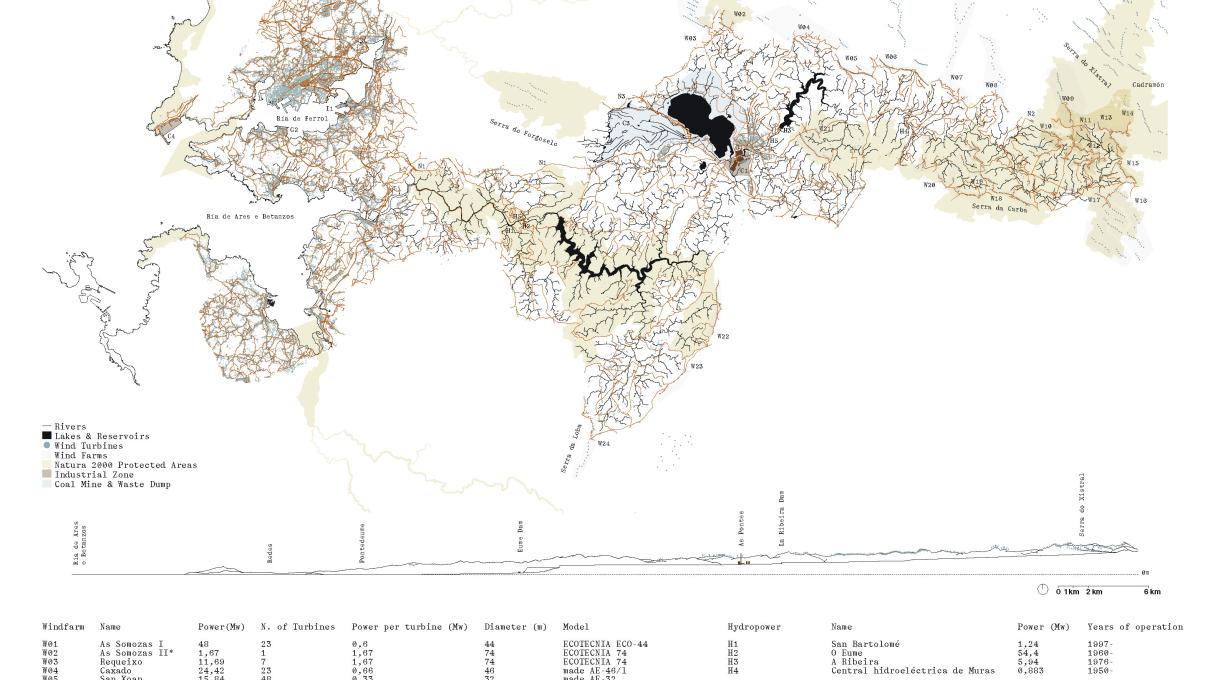 Preliminary concept for the Eume River Energy Framework. Credit: Project team
A project team with diverse skills
The planning for the Territorial Framework and the local projects will involve residents and local government. The project team has been carefully selected for that purpose.
The research and design team members are Galician native Salgueiro Barrio, who is coauthor of “Territorial Design. Spatial Practices Across Architecture, Geography, and Urbanization” (Leuven University Press, forthcoming), with Adria Carbonell; “The World as an Architectural Project” (MIT Press, 2020), with coauthors Hashim Sarkis and Gabriel Kozlwski); and 20 journal articles on territory, energy transitions, and urbanization. He is the founder of the architectural practice, RSAU, and the curatorial director for the MIT Morningside Academy for Design.
Working with him will be Aurora Armental and Stefano Ciurlo, the founding partners of Estar, an award-winning architecture and landscape architecture practice based in Spain and Switzerland, whose research focuses on the intersection of heritage and ecology. Luis Díaz Díaz, who trained as a civil engineer with a focus on territorial planning, and is now one of the most renowned architectural and landscape photographers in Spain, will serve as the project photographer.
“Photography is one of the best tools for documenting the site where we are intervening and showing the values that it has to the community, to the different stakeholders, and decision-makers,” Salgueiro Barrio says.
- Image
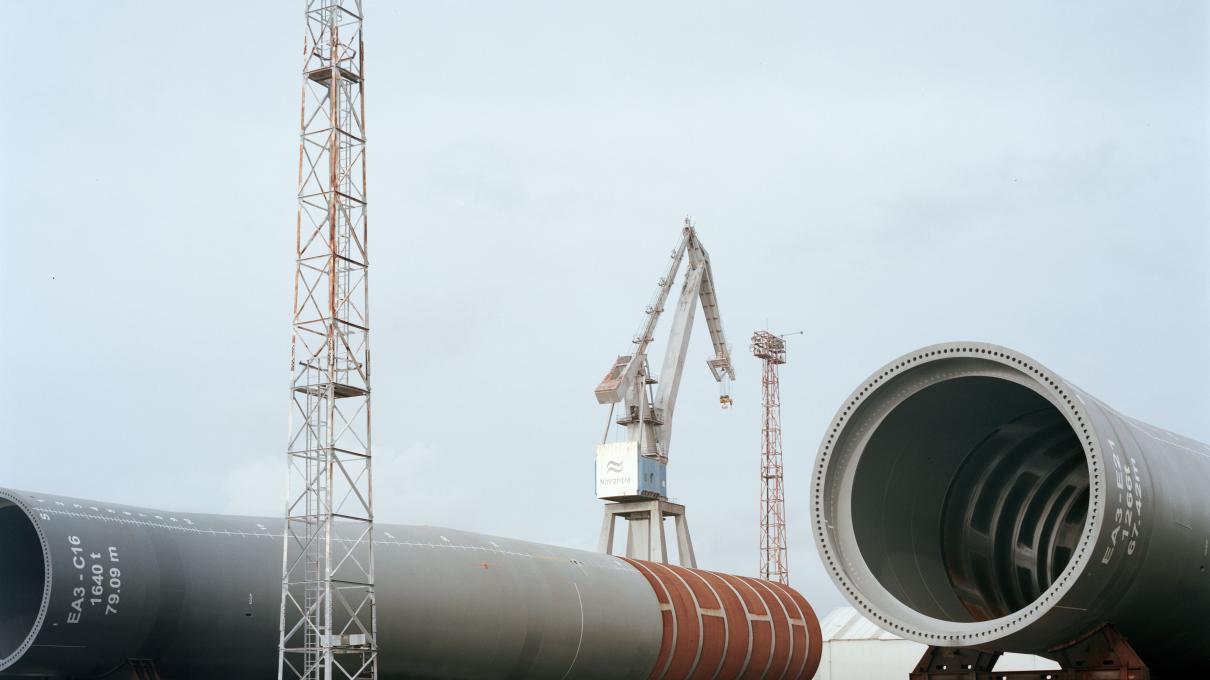 New structures for offshore wind turbines, fabricated at the Ferrol shipyards. Credit: Luis Díaz Díaz
The group plans to have dialogue and debate with energy companies, ecological NGOs, and other groups and entities with vital, yet different, perspectives on the area and its needs. To interact with all these groups, the design and research team will work in collaboration with Fundacion RIA, an initiative of Pritzker Prize winner David Chipperfield dedicated to territorial planning and community consulting.
The Leventhal City Prize promotes cutting-edge projects that can transform the contexts where they intervene. Correspondingly, the Eume River Basin team will work with two local administrations that will facilitate the implementation of the projects and help the team understand the economic, urban, ecological, and energetic conditions of the region: the government agency with administrative responsibilities over the province of A Coruña, where the Eume River Basin is located, and the municipality of As Pontes.
“As we enter an era when our systems of energy must be fundamentally reimagined, this project shows how design can unlock new possibilities, forging transitions that are equitable, regenerative, and rooted in community power,” Williams said.