


MIT LCAU and CDDL "Benchmark for NSW" Project wins Gold Medal at Australian Good Design Awards
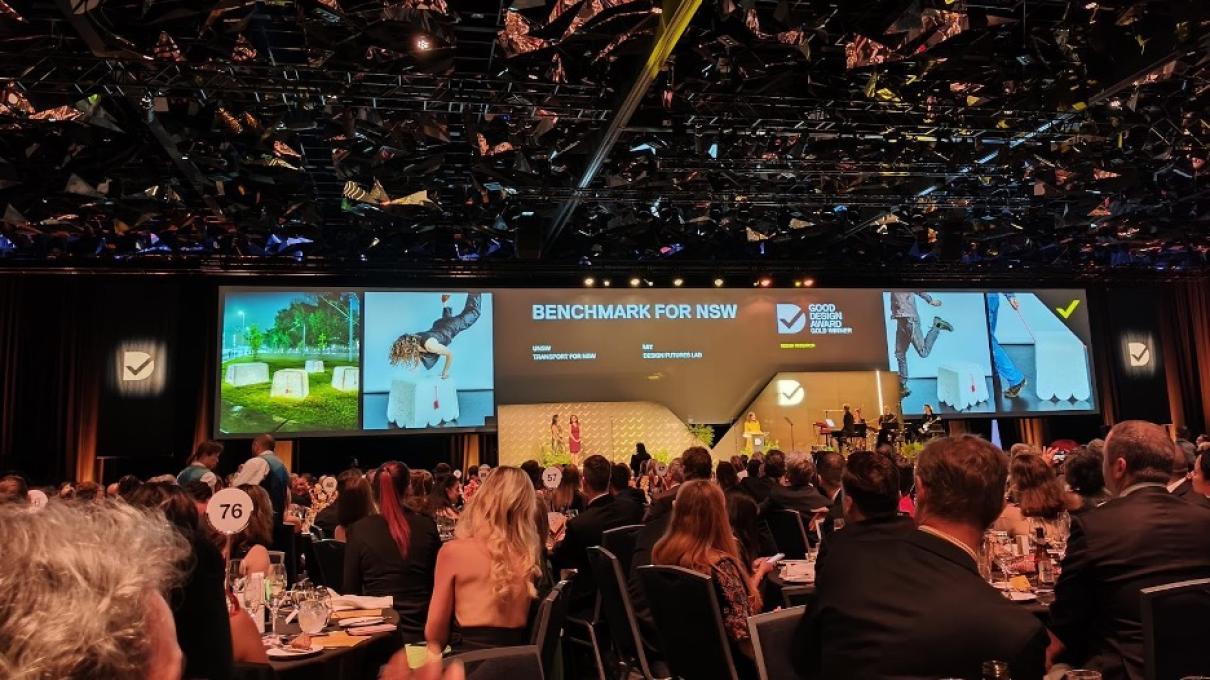
Image Credit: Project team
.The Norman B. Leventhal Center for Advanced Urbanism (LCAU) and the Civic Data Design Lab (CDDL) are proud to announce that they have been awarded a Gold Medal from the Australian Good Design Awards for their Benchmark for New South Wales (NSW) project. The international honor recognizes excellence in design and innovation, celebrating projects that advance the built environment and improve public life.
The award comes as the LCAU and CDDL release their latest publication, “Striking a Pose,” in Smart Cities. The article introduces a privacy-preserving, Do-It-Yourself (DIY) computer vision sensor kit that allows researchers, planners, and communities to analyze how people use public space. Leveraging an innovative pose-estimation–enhanced technique, the system captures body-position data while avoiding facial identification, offering a new model for ethical, transparent, and community-centered urban sensing.
- Image
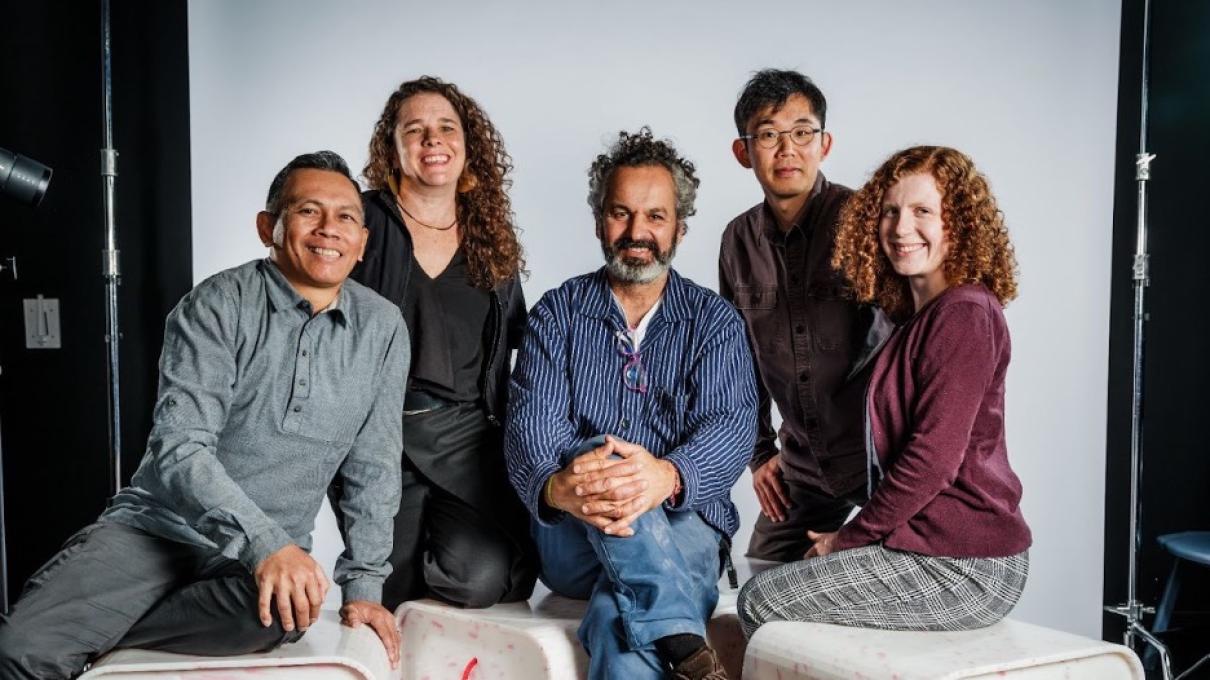 Several project team members seated on the Benchmark for NSW benches (L to R: Mariano Ramirez, Sarah Williams, Gonzalo Portas, Minwook Kang, and Hannah Shumway). Image credit: Robert Walsh.
For decades, urban planners and designers have sought to understand how design influences public life, a field of research pioneered by William Whyte, who famously recorded social life in Manhattan's public spaces. In recent years, computer vision has provided new tools for automating the observation of public life, but it’s been hard for the average urban designer or city planner to access these technologies.
The Benchmark New South Wales project fills this gap with the development of the “Public Life Sensor Kit.” As Sarah Williams, Associate Professor of Technology and Urban Planning at MIT and director of the LCAU put it: “we realized that no company offered an out-of-the-box sensor kit that could collect the data planners and designers need.”
The Public Life Sensor Kit is built with open-source software and affordable hardware, such as GoPro cameras and the Jetson Nano, an edge computing device from NVIDIA. LCAU researchers developed a pose-enhanced action recognition model that increases the accuracy of behavioral analysis. Information about how to access and build these tools is found on the Benchmark website along with data analysis from the project.
The sensor kit has already demonstrated its capabilities in real-world applications in Sydney, Australia. Following a successful deployment at the University of New South Wales (UNSW) campus in 2024, the project was expanded to another site, The Goods Line park, in 2025.
- Image
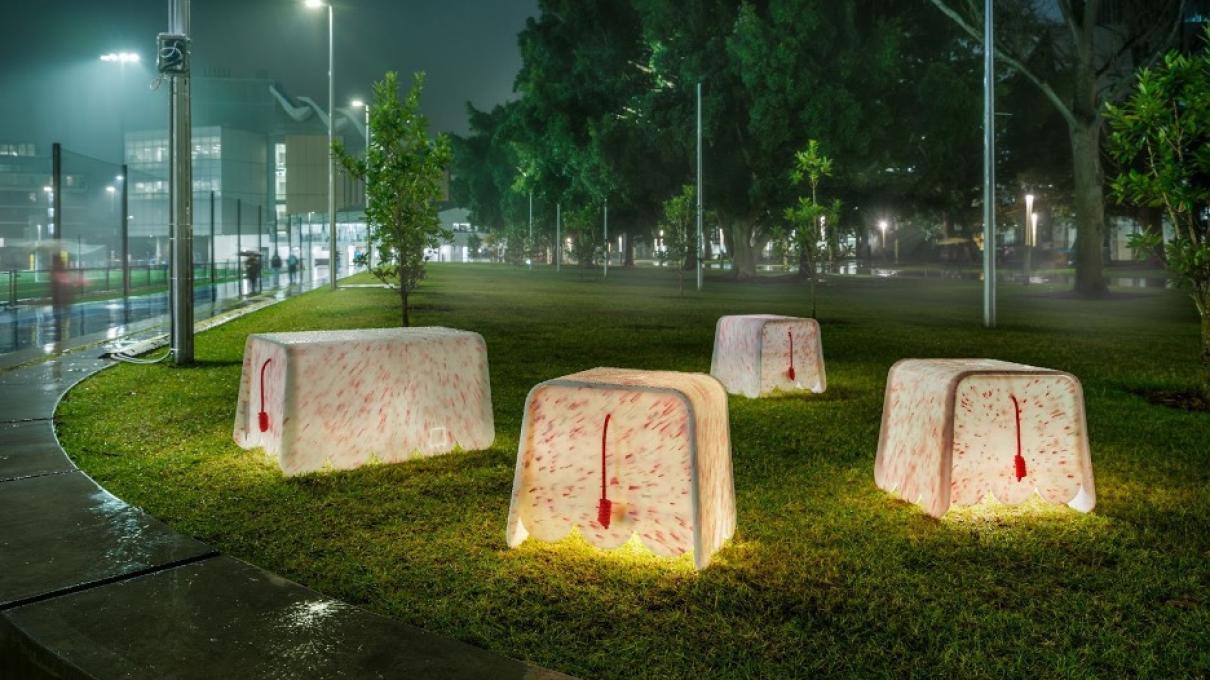 Project benches deployed at the Village Green in Sydney, Australia (2024). The benches were designed by women in UNSW’s industrial design program. Image credit: Robert Walsh.
These deployments studied how public behavior changed over time—where people clustered, socialized, and relaxed on the benches—and how those patterns shifted with the introduction of new public furniture. The benches used as part of the project were co-designed by female industrial design students in collaboration with UNSW faculty.
- Image
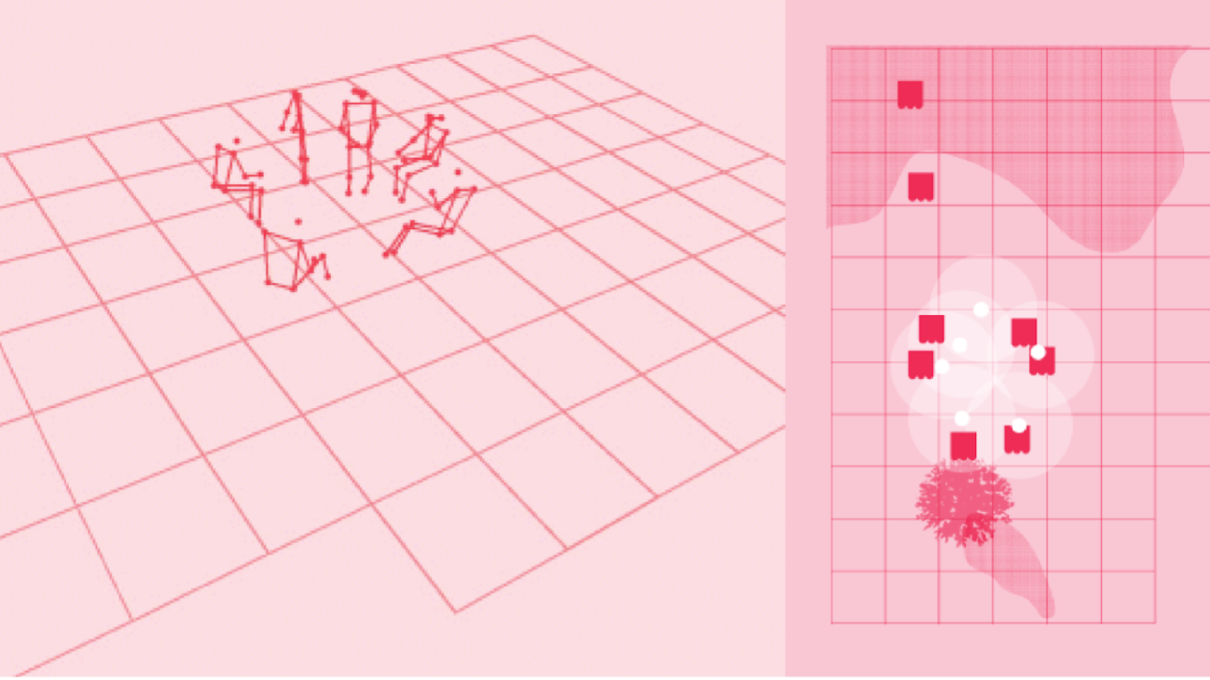 Sample data collected at UNSW’s Village Green in Sydney, Australia (2024). Image credit: Project team.
“The Public Life Sensor Kit helps us quantify the impact of design interventions like this one,” said Gonzalo Portas, Associate Lecturer at the University of New South Wales, who helped build the benches. “As a designer, this type of data is empowering. It helps us know whether the spaces we build are truly comfortable and inclusive in practice.”
The project team affectionately refers to the benches as their “little pigs.” Made from recycled pink plastic and fitted with rope handles that curl like pig tails, the benches can be pulled and repositioned across the plaza. Their playful form and movement make them a whimsical, engaging addition to the urban environment.
- Image
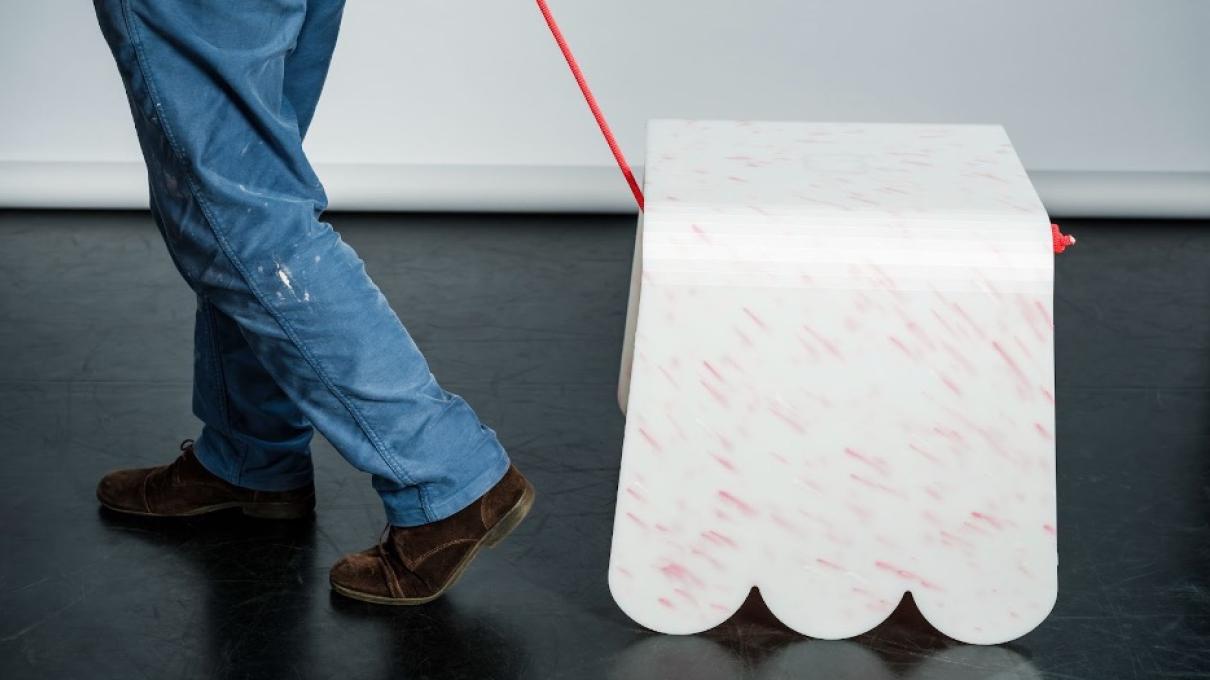 Benchmark for NSW team member Gonzalo Portas, who helped build the benches, pulls a movable “little pig” using its rope handle. Sydney, Australia. Image credit: Robert Walsh.
These little pigs are part of a collaborative effort generously supported as a pilot for the Safer Cities Program, led by Transport for New South Wales. It builds on Associate Professor Sarah Williams’ original “Benchmark 1.0” project from 2018, which was supported by the Gehl Foundation.
At MIT’s LCAU and CDDL, the team included Sarah Williams (project director), Minwook Kang (project manager), Hannah Shumway and Sebastian Ives (sensor kit development), Maria Gabriela Carucci Alvarez (website graphics), and Karen Kuo, Clay Anderson, and Mercy Olagunju. The UNSW team included Gonzalo Portas and Mariano Ramirez, who co-designed the movable benches with students.