Course Description
Students and faculty from MIT’s Departments of Architecture and Urban Studies and Planning (DUSP) worked with partners at the Federal University of Amazonas (UFAM) and the University of São Paulo (USP) to consider how the architecture, design, and urban planning professions could learn from riverfront communities in the urbanizing Amazon and might best serve them in addressing and improving strategies for growth without waste, and for quality over just quantity in urban life.
The MIT group worked together with UFAM and USP to envision the future and potentialities of a sustainable Amazonian city, leveraging the case of Manaus—the largest Amazonian city—as a reference point. Student teams visited with and were inspired by riverfront communities across the Manaus metropolitan region, learning from these communities’ day-to-day lives and their current strategies for dealing with the accumulation of solid waste and untreated wastewater in riverways, the cement enclosure of traditional, iconic river canals, the growing demand for affordable housing, the increasing urban heat profile, the lack of mobility options, and the intense (and intensifying) fluctuation of the Rio Negro.
Impact
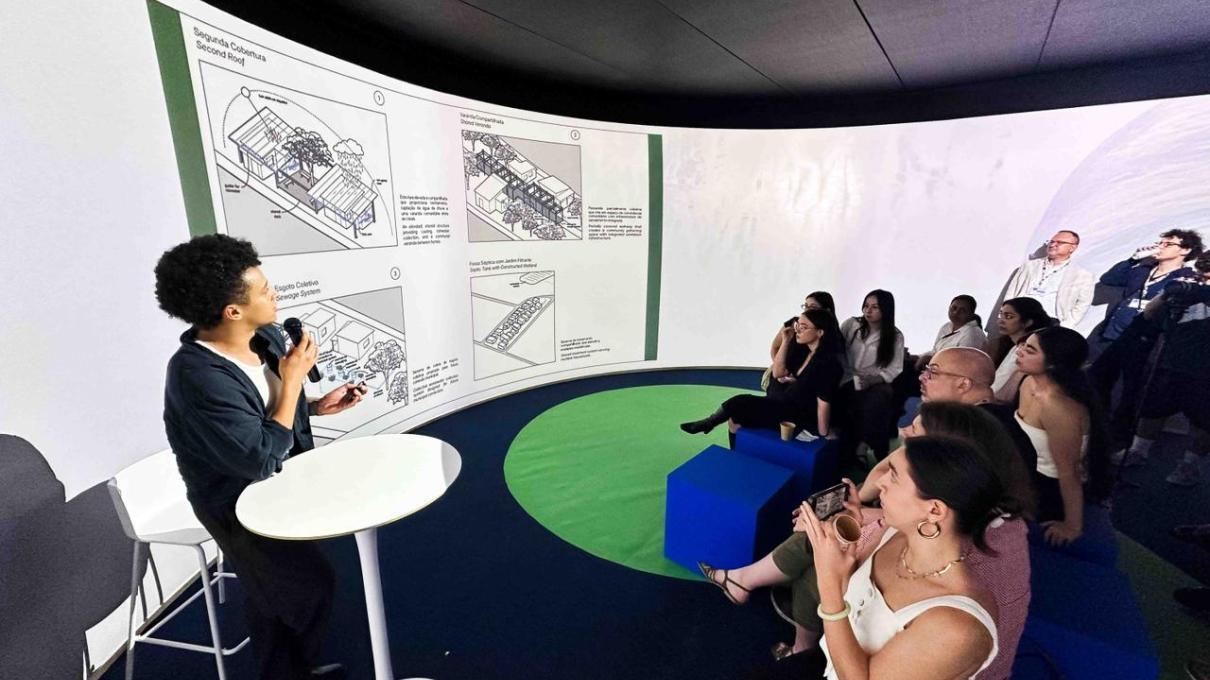
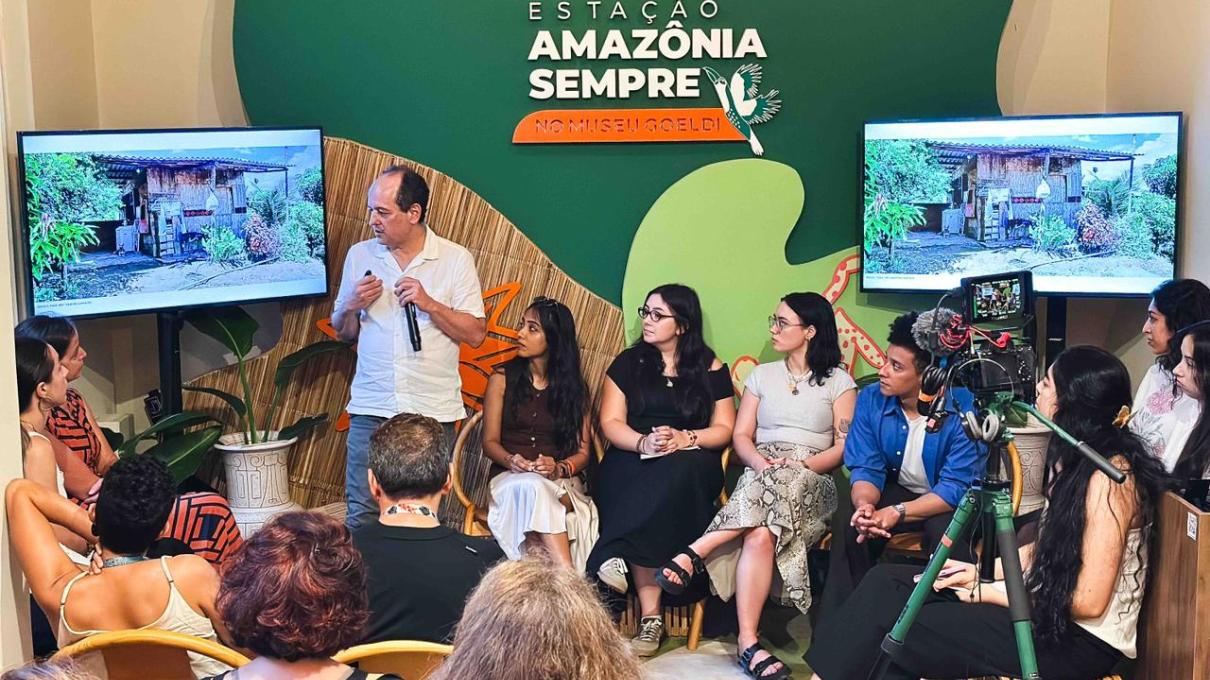
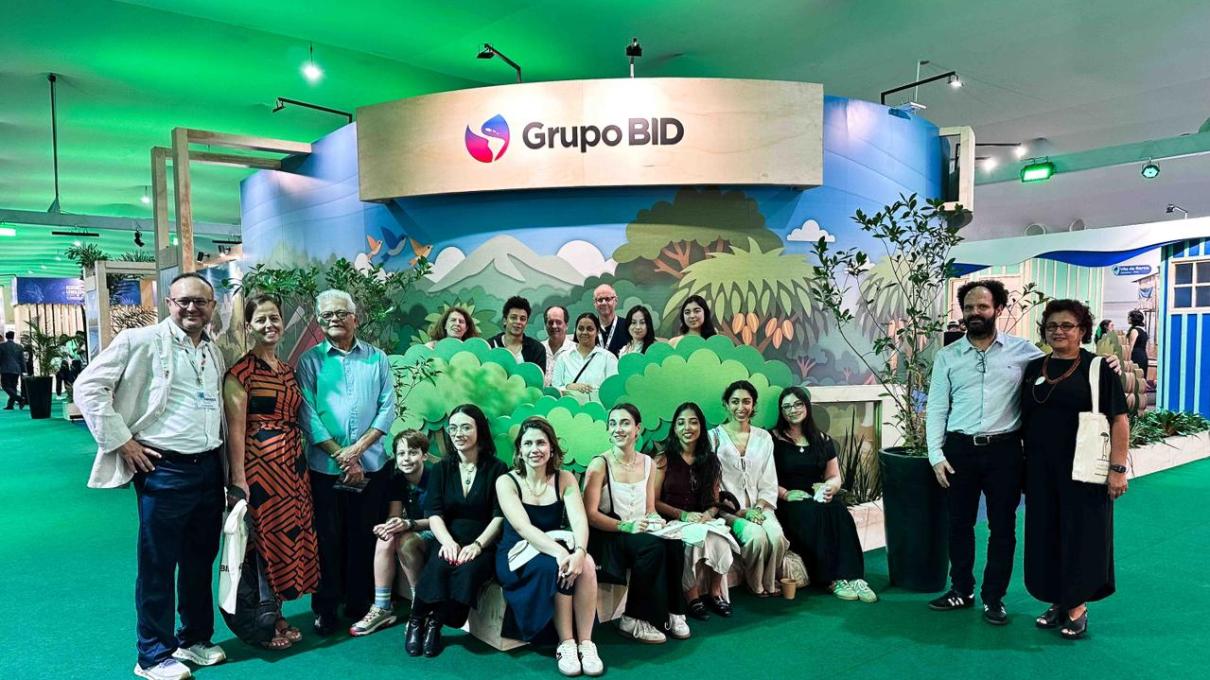
The work of course participants was featured in two sessions at COP30 and in an exhibit, all in cooperation with the Inter-American Development Bank (IDB), whose Cities Lab was a major sponsor and partner. The student teams’ work calls attention to the immense potential of three fundamentally Amazonian—and urban—communities, namely: flutuantes (floating houses on the river), palafitas (stilt houses in floodplains), and regular construction resting on dry land, including Indigenous urban neighborhoods. One such neighborhood, Parque das Tribos, houses nearly five thousand people and more than thirty Indigenous languages. Here are Indigenous households that were both expelled from their land and are kept still on the outskirts of the urban. Yet with these same communities, project teams learned that the very nature of the fluvial city holds the power to redefine and upgrade the power of shared sustainability.
- Image
- Image