


Sensing Gardens
Sidara-MIT Seed Grant recipients use AI to identify and monitor insects, advance biodiversity monitoring
With support from a generous seed grant provided by Sidara, a team from MIT's Senseable City Lab is currently developing an AI-powered biodiversity monitoring system through their Sensing Garden project. The system is designed to help cities monitor insect populations, which can inform planning decisions and other strategies to protect urban biodiversity.
The project uses vision recognition to identify and track insect species in real-time. Since launching in 2025, the team has built operational AI models for flying insect classification, developed scalable hardware that can work on low-compute devices, and installed a prototype monitoring station.
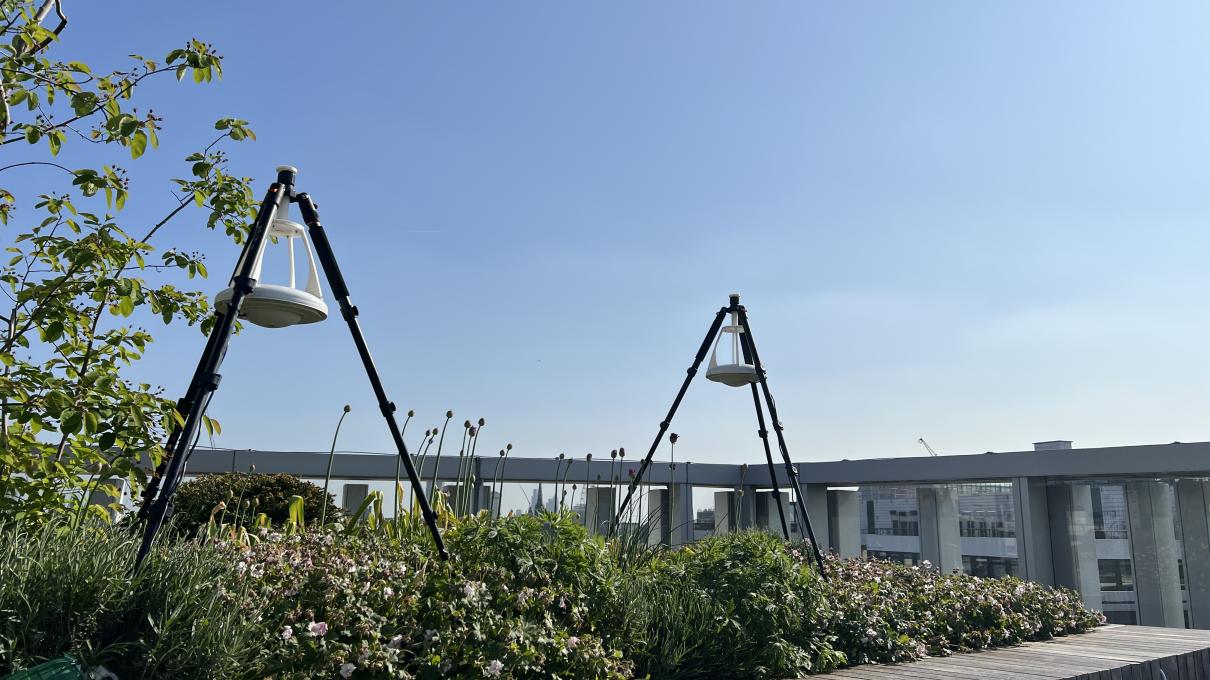
As part of Phase 1 of the project, the prototype monitoring system has been installed on a rooftop terrace at Sidara’s London offices.
- Image
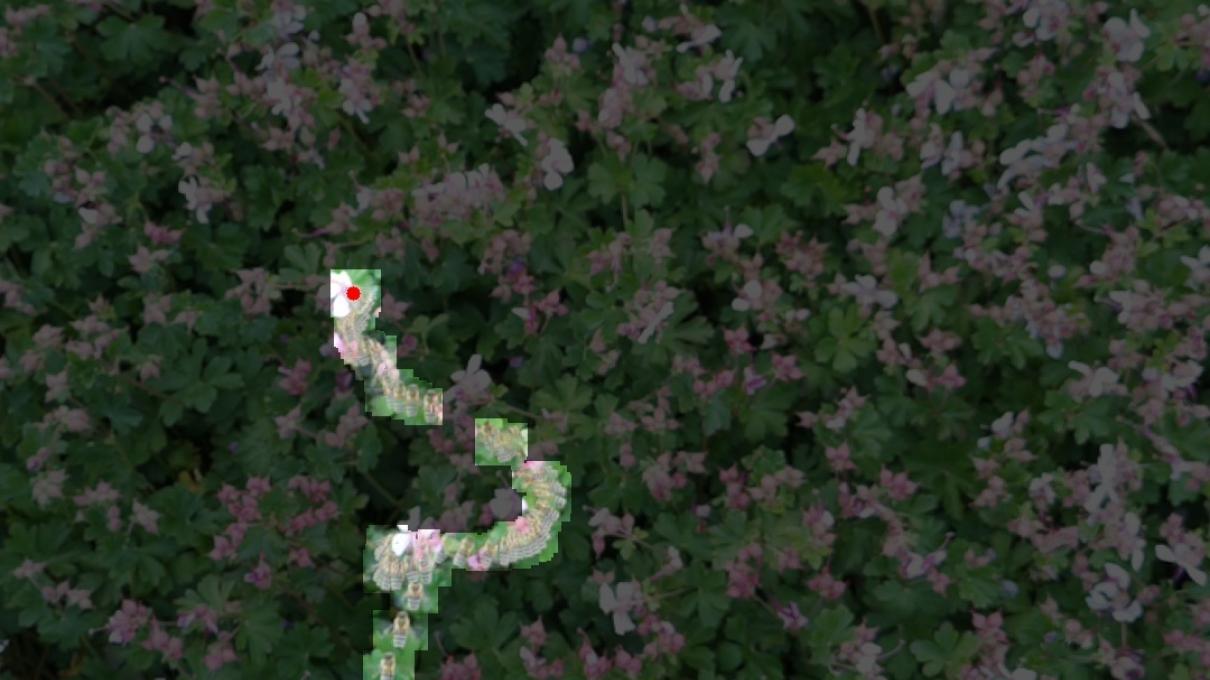
The monitoring device is called “Flik,” and it runs an optimized detecting, tracking and classification system for fast moving insects in the wild, hovering over a flowerbed and capturing changes over time in abundance and biodiversity. Credit: Project team
- Image
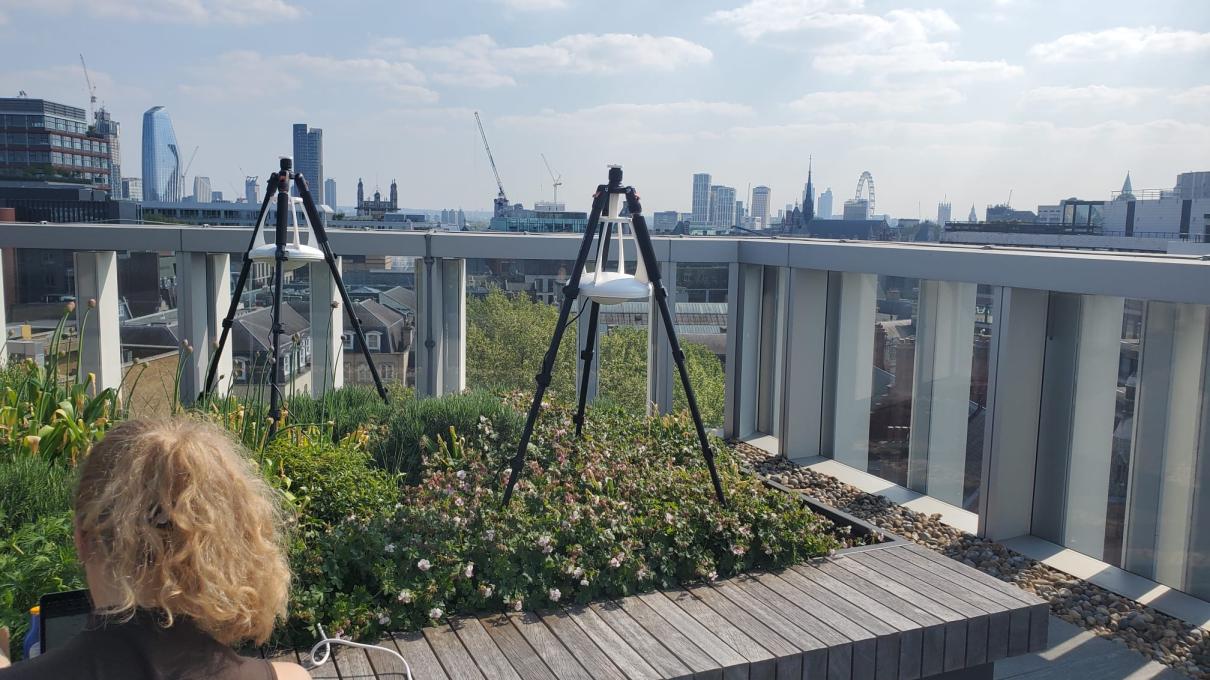
The monitoring device is called “Flik,” and it runs an optimized detecting, tracking and classification system for fast moving insects in the wild, hovering over a flowerbed and capturing changes over time in abundance and biodiversity. Credit: Project team
Established in 2018, the Sidara Urban Seed Fund is administered by MIT’s Leventhal Center for Advanced Urbanism (LCAU) and invests in research that will create more sustainable and livable cities. Since its creation, 14 grants have been awarded across MIT in diverse fields, from artificial intelligence to cultural heritage.
Sidara’s Impact
The team notes that the seed funding has acted as a catalyst for the initiative, establishing biodiversity monitoring as a strategic research direction for the Senseable City Lab and helping them secure further grants to solve complex technical problems in biodiversity monitoring, like domain shifts and rare species distribution.
Additionally, the seed funding has helped to create a network of global collaborators, including partners at the Amsterdam Institute for Advanced Metropolitan Solutions (AMS Institute), Institut national de la recherche scientifique (Canadian National Institute for Scientific Research), the City of Laval, Wageningen University & Research (WUR), Delft University of Technology, and Imperial College London.
Next Steps
Moving forward, the team plans to publish research findings and conduct further analysis that combines insect data with weather, pollution, and urban heat data, which will help researchers better understand population dynamics.
New deployments in Canada, the Netherlands, and the United Kingdom are also planned in 2026 for further studies in urban biodiversity.
The work hopes to demonstrate how computer vision can support biodiversity monitoring across cities in practical, scalable ways, providing actionable data for urban planners and policymakers.
This work has been generously supported by a Sidara Urban Research Seed Grant. Learn more about the LCAU’s collaboration with Sidara.
Team
- Carlo Ratti, Director, Senseable City Lab, MIT
- Fábio Duarte (PI), Principal Research Scientist, Senseable City Lab, MIT
- Titus Venverloo (Lab Lead)
- Åse Håtveit (Research Fellow)
- Simone Erba (Research Fellow)
- Sabrina Tian (Research Fellow)
- Deniz Aydemir (Research Assistant)
- Mattia Consani (Visiting Student/Master’s, Embedded Systems)
- Kacper Ryske (Visiting Student/Master’s, Architecture)
- Simone Erba (Visiting Student/Master’s, Mathematics/Environmental Sciences)
- Minyang Sun (Visiting Student/Master’s, Computer Science)
- Esther Saller (Visiting Student/Master’s, Embedded Systems)